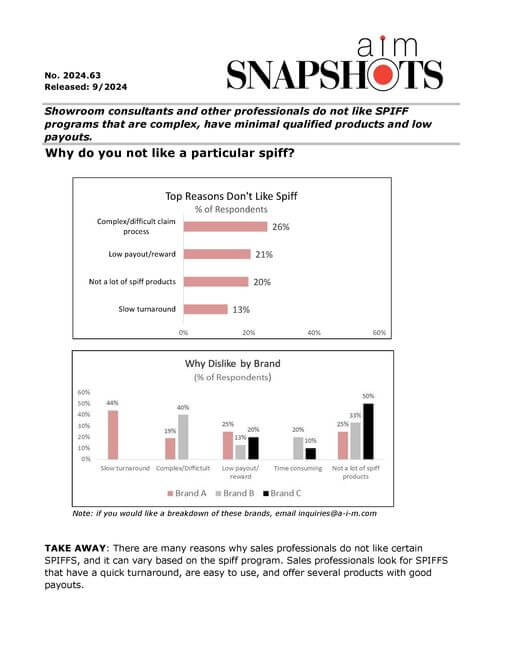
Why do you not like a particular spiff?
Showroom consultants and other professionals do not like SPIFF programs that are complex, have minimal qualified products and low payouts.
AIM Snapshots provide marketing and business professionals with quick easy to digest market information based on current AIM research and market studies. These 2-page reports provide a brief written summary and graphic presentation of one key research finding on a variety of topics. AIM Snapshots provide an overview of current market trends, audience behavior, customer insight and much more.
Showroom consultants and other professionals do not like SPIFF programs that are complex, have minimal qualified products and low payouts.

Showroom consultants and professionals are typically involved in several SPIFF programs but some brands have higher participation rate than others.
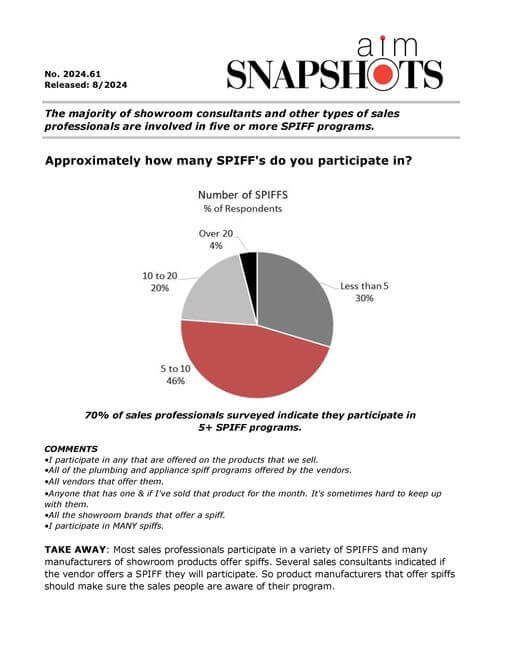
The majority of showroom consultants and other types of sales professionals are involved in five or more SPIFF programs.

Sales professionals prefer SPIFF programs that are easy use, offer top pay and have multiple products that qualify.

Approximately half of the sales professionals surveyed participate in one or more SPIFF or sales incentive program.
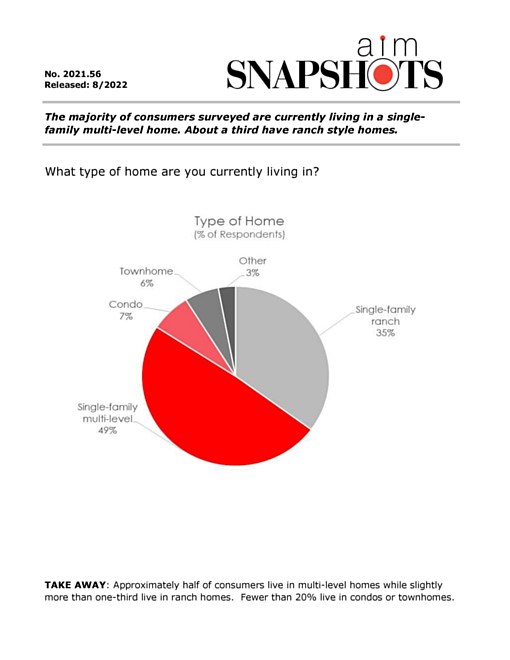
The majority of consumers surveyed are currently living in a single-family multi-level home. About a third have ranch style homes.
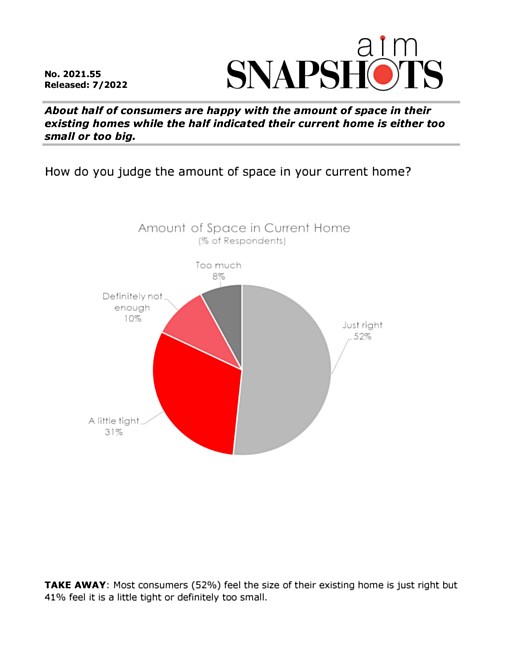
About half of consumers are happy with the amount of space in their existing homes while the half indicated their current home is either too small or too big.
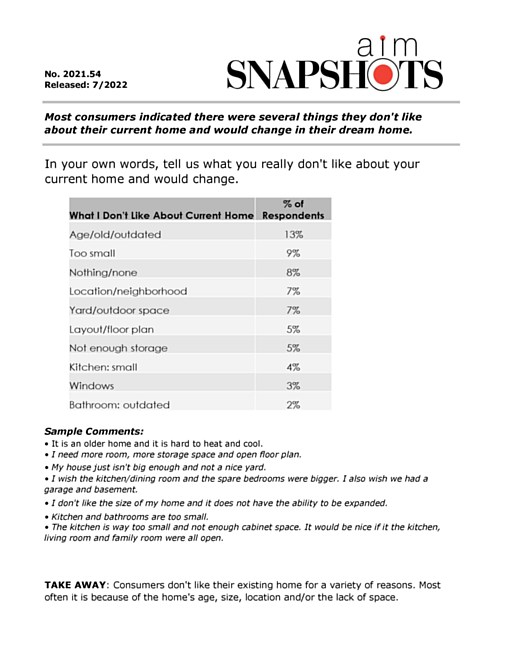
Most consumers indicated there were several things they don’t like about their current home and would change in their dream home.

The location and the size of a person’s home are most often the thing consumers like most about their home

Consumers most often turn to friends and family for recommendations when selecting a builder for their dream homes. They also use online searches and reviews.

Slightly more than 50% of consumers indicated they would build or purchase a single-family ranch home while 43% preferred a multi-level home.

The majority of homeowners want a laundry room, garage, two or more bedrooms and more than one bathroom. Most also want energy efficient windows and hardwood floors.

The majority of homeowners plan to spend more than $5,000 on their renovation project(s).

The majority of homeowners indicated the reason for considering a change in their home was to “upgrade” for new and increased features.

The majority of homeowners indicated they were not planning on selling, buying or renovating their home over the next 12 months.

Manufacturers need to make sure the information they provide in social media and online is relevant, factual and easy to find.
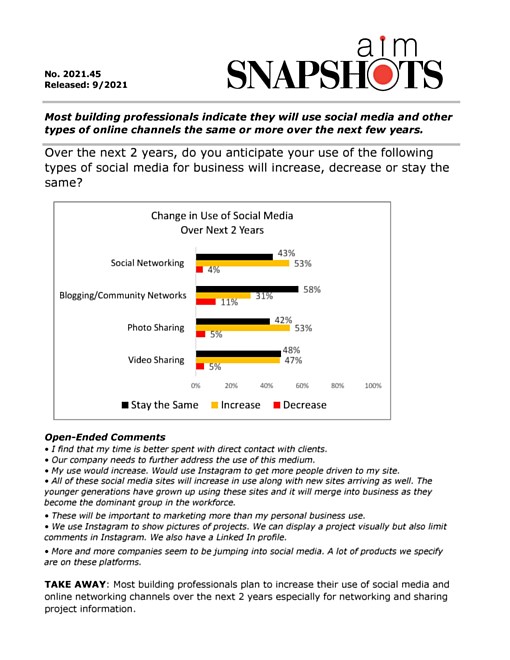
Most building professionals indicate they will use social media and other types of online channels the same or more over the next few years.

The majority of building professionals indicate the COVID pandemic has some impact on their use of social media and online platforms.
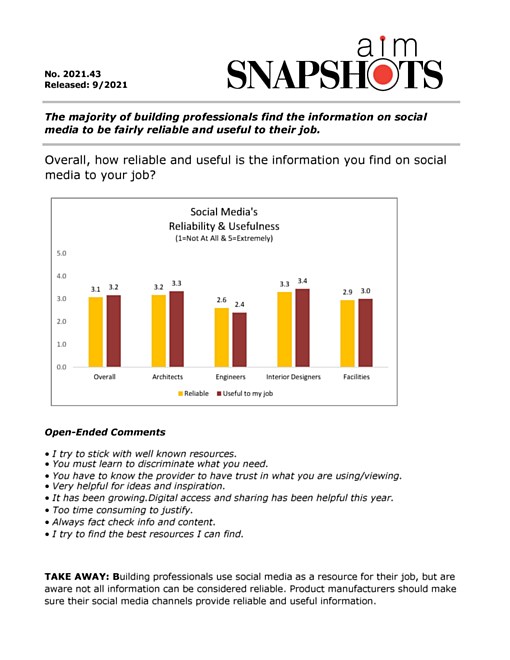
The majority of building professionals find the information on social media to be fairly reliable and useful to their job.
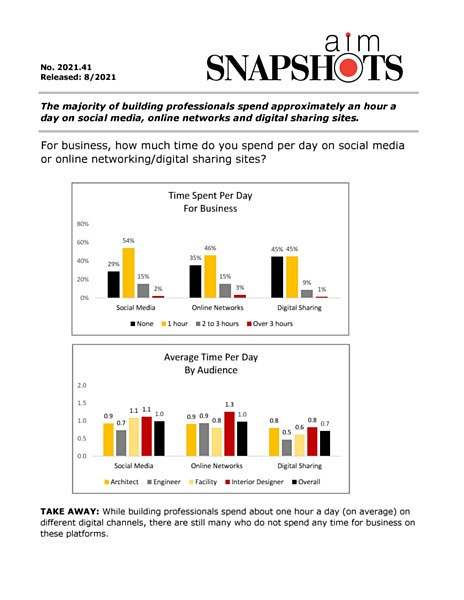
The majority of building professionals spend approximately an hour a day on social media, online networks and digital sharing sites.
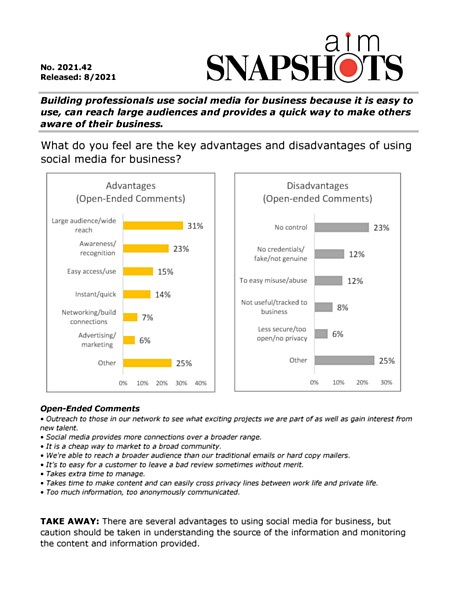
Building professionals use social media for business because it is easy to use, can reach large audiences and provides a quick way to make others aware of their business.
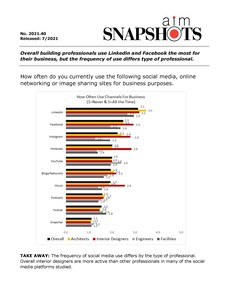
Overall building professionals use LinkedIn and Facebook the most for their business, but the frequency of use differs type of professional.

While building professionals “prefer” a variety of different social media/communication sites, they use Facebook the most for both personal and business purposes.

The majority of building professionals use social media in both their jobs and for personal purposes.
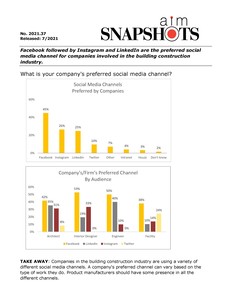
Facebook followed by Instagram and LinkedIn are the preferred social media channel for companies involved in the building construction industry.
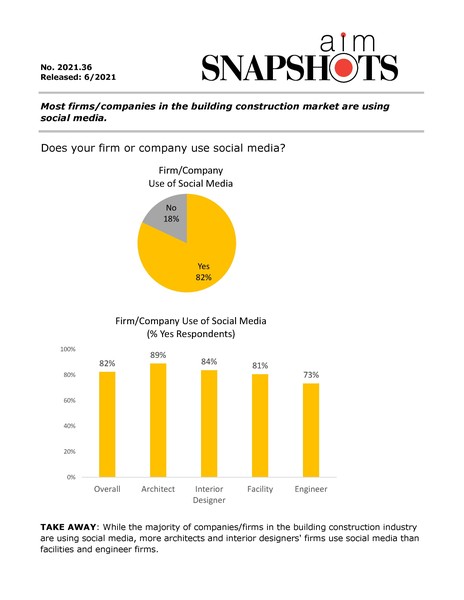
Most firms/companies in the building construction market are using social media.
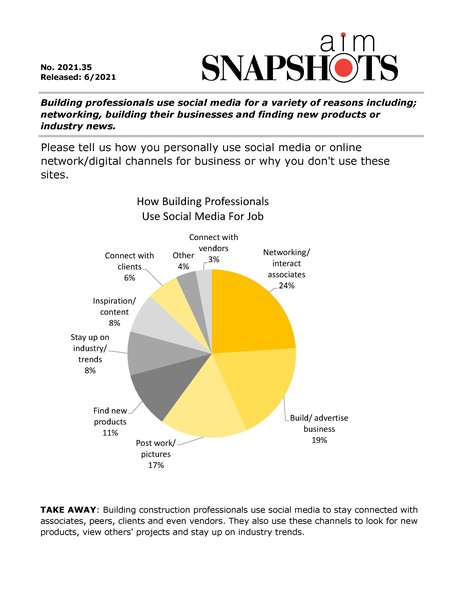
Building professionals use social media for a variety of reasons including: networking, building their businesses and finding new products or industry news.

The majority of building professionals use some type of social media or on-line channels for their job.
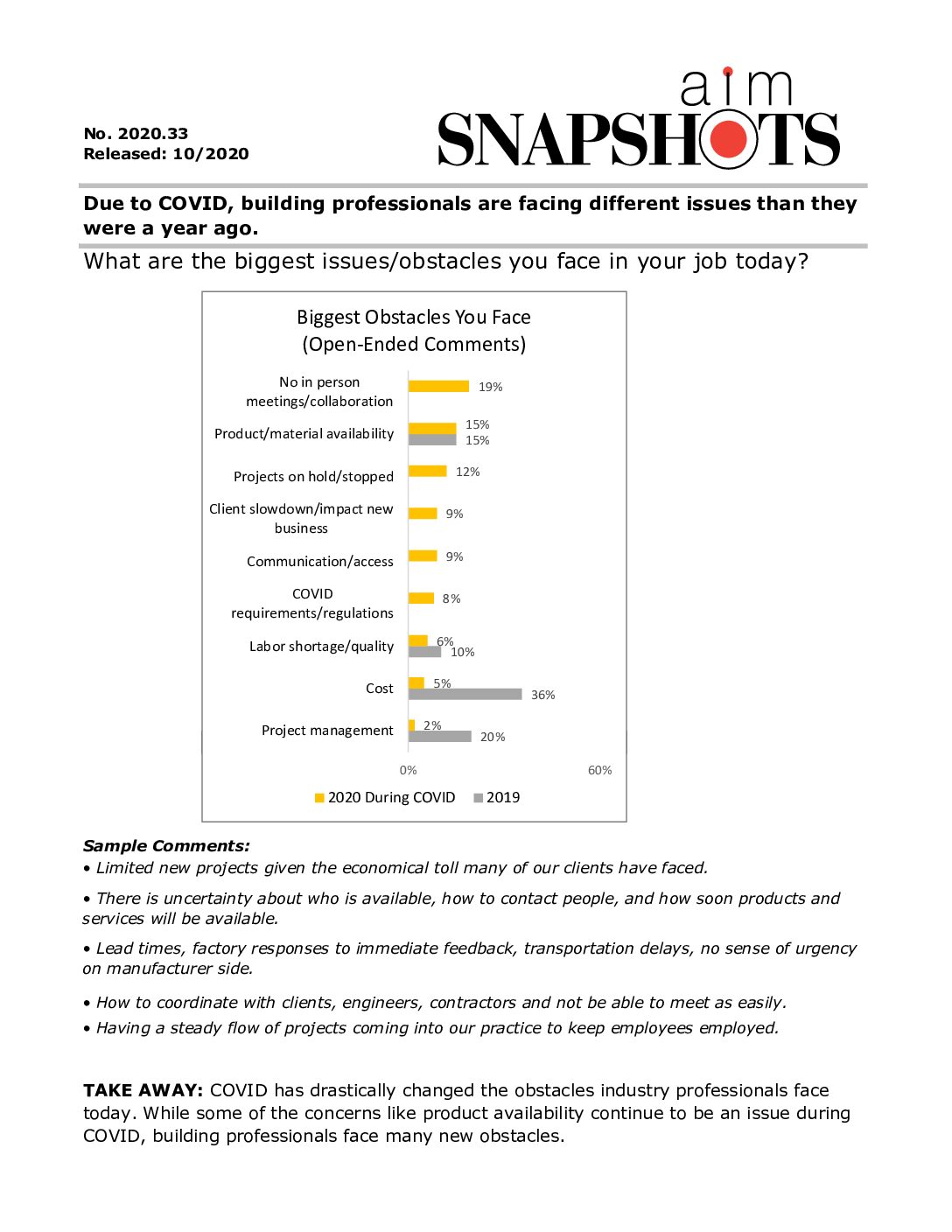
Due to COVID, building professionals are facing different issues than they were a year ago.
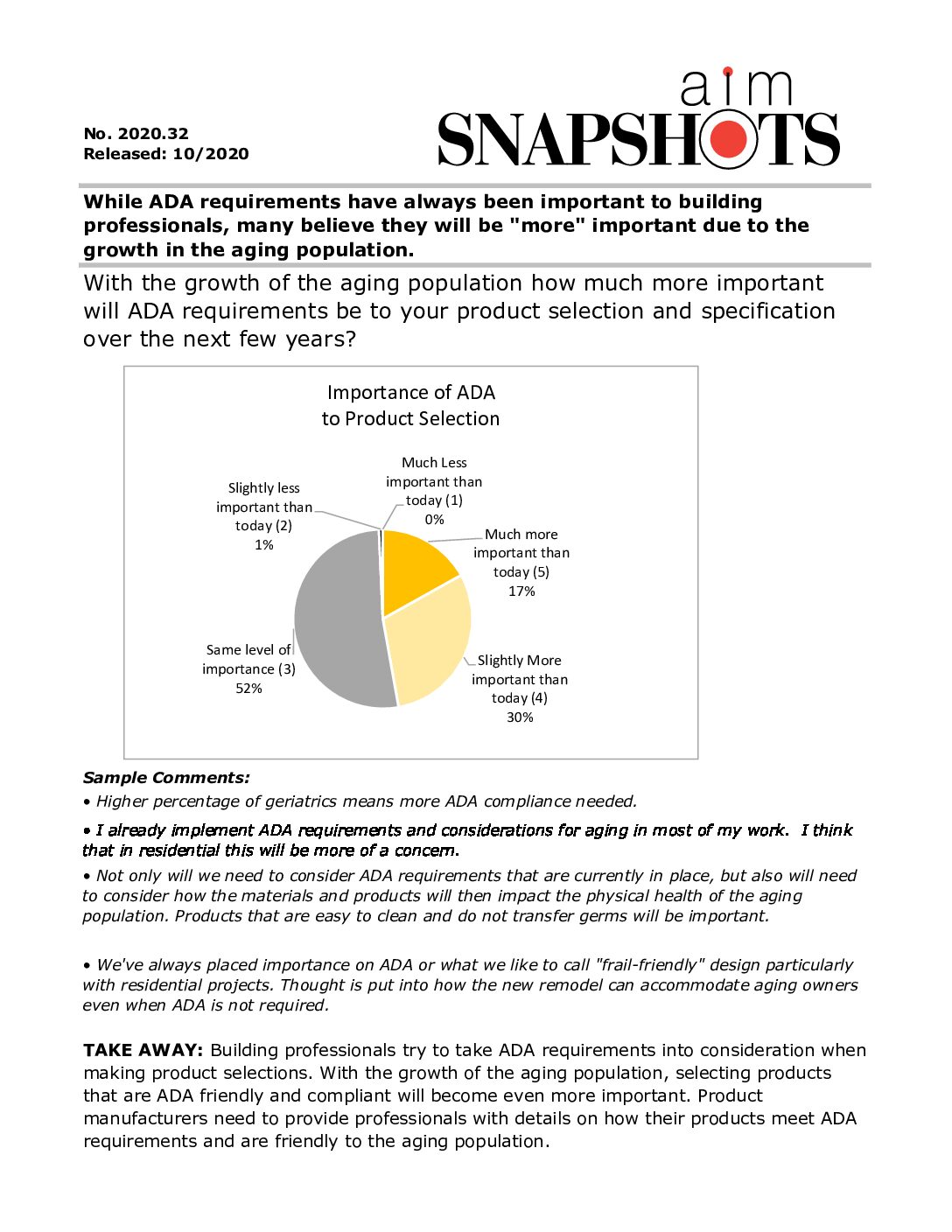
While ADA requirements have always been important to building professionals, many believe they will be “more” important due to the growth in the aging population.

COVID will and is having an impact on building professionals’ product specifications and selections.

Building professionals need a variety of information on products/materials and the type of information needed can vary based on their job function.
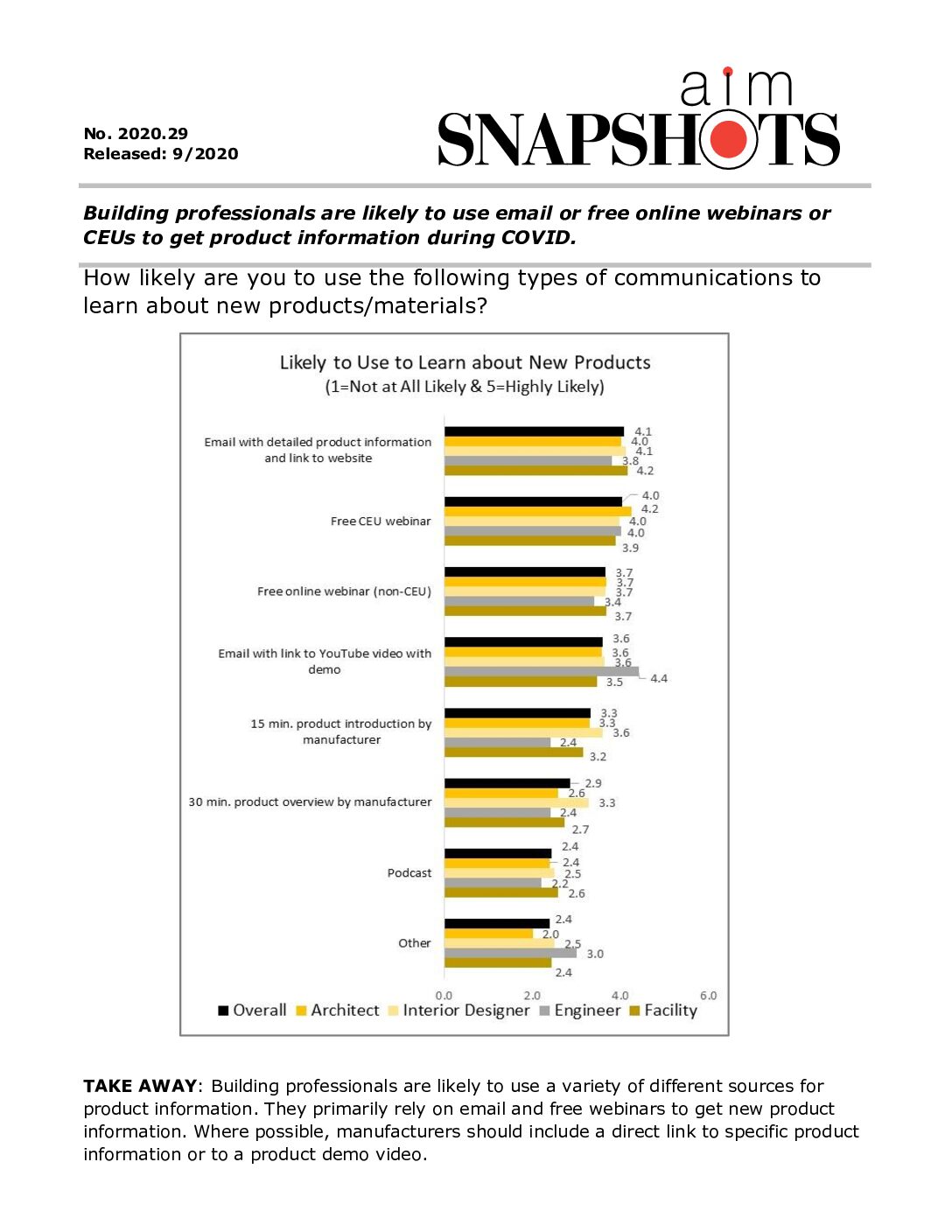
Building professionals are likely to use email or free online webinars or CEUs to get product information during COVID.

The majority of facilities and building professionals’ firms require visitors to wear face masks, maintain social distancing and make appointments.
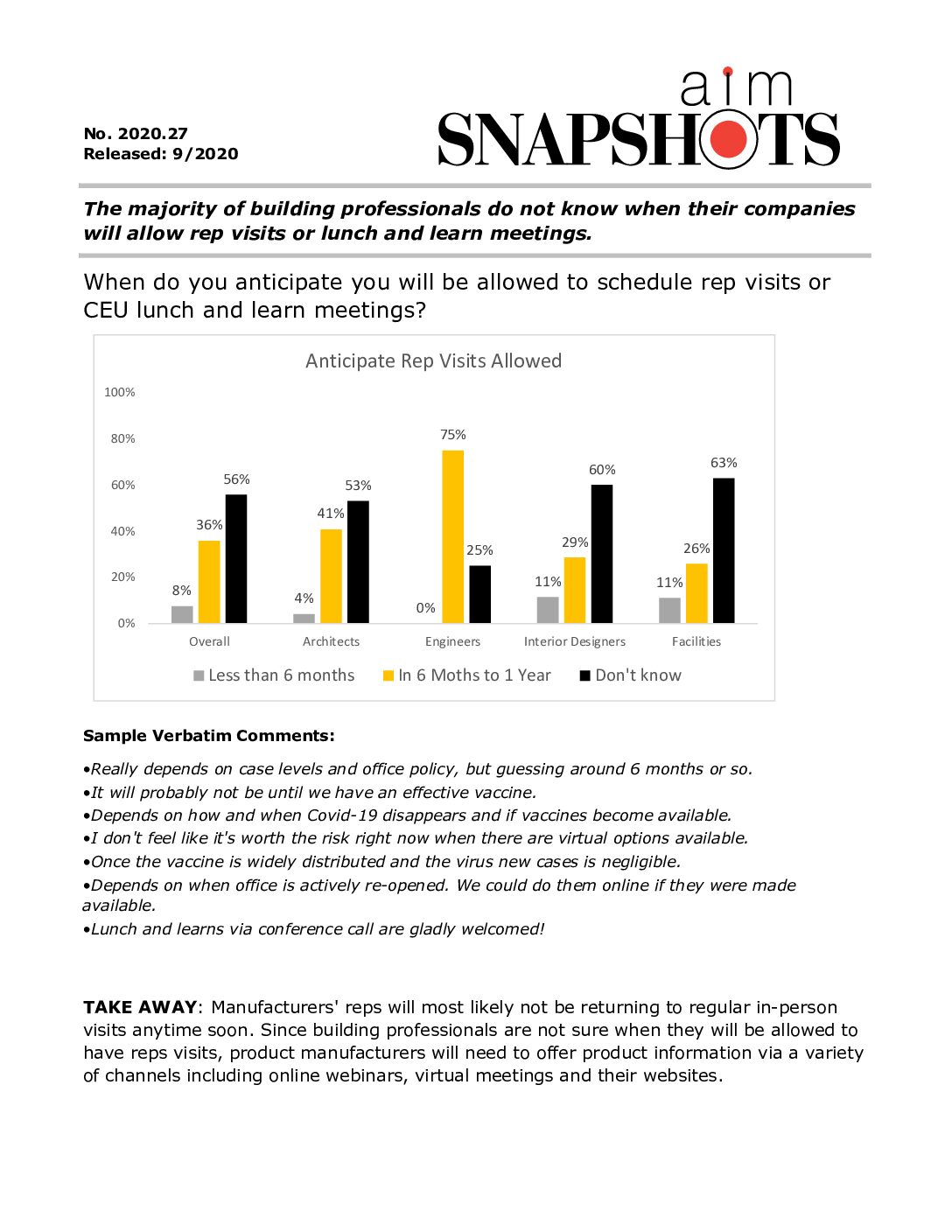
The majority of building professionals do not know when their companies will allow rep visits or lunch and learn meetings.
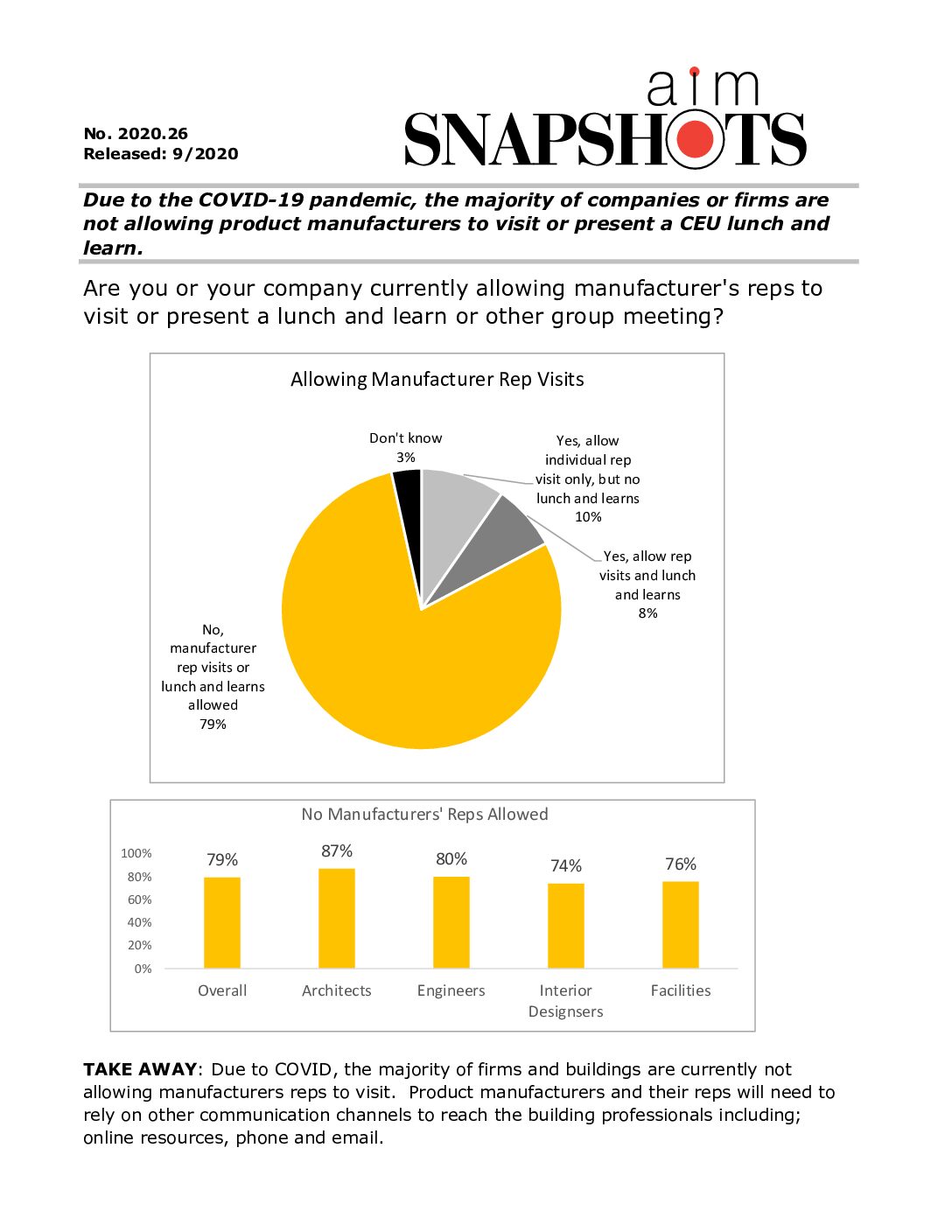
Due to the COVID-19 pandemic, the majority of companies or firms are not allowing product manufacturers to visit or present a CEU lunch and learn.
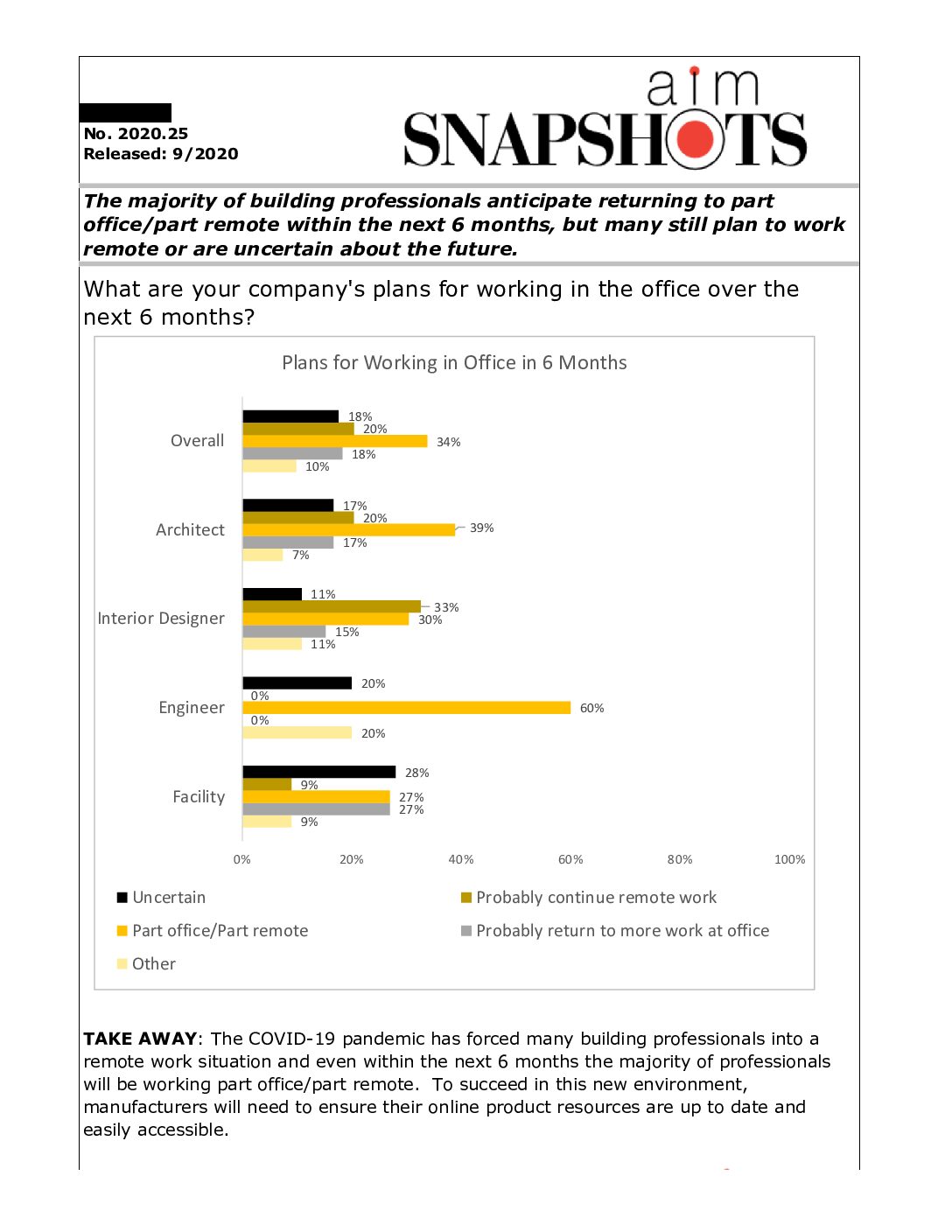
The majority of building professionals anticipate returning to part office/part remote within the next 6 months, but many still plan to work remote or are uncertain about the future.
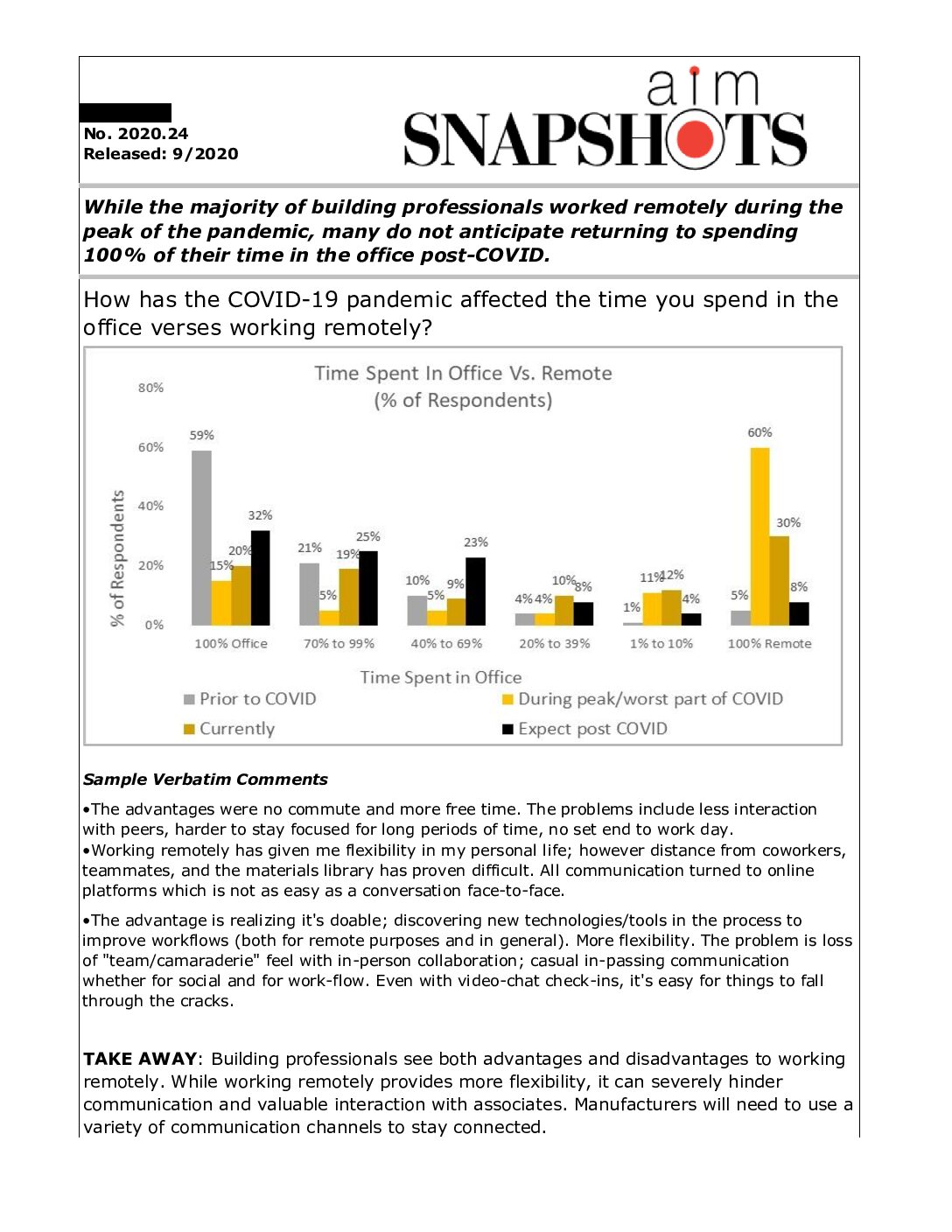
While the majority of building professionals worked remotely during the peak of the pandemic, many do not anticipate returning to spending 100% of their time in the office post-COVID.
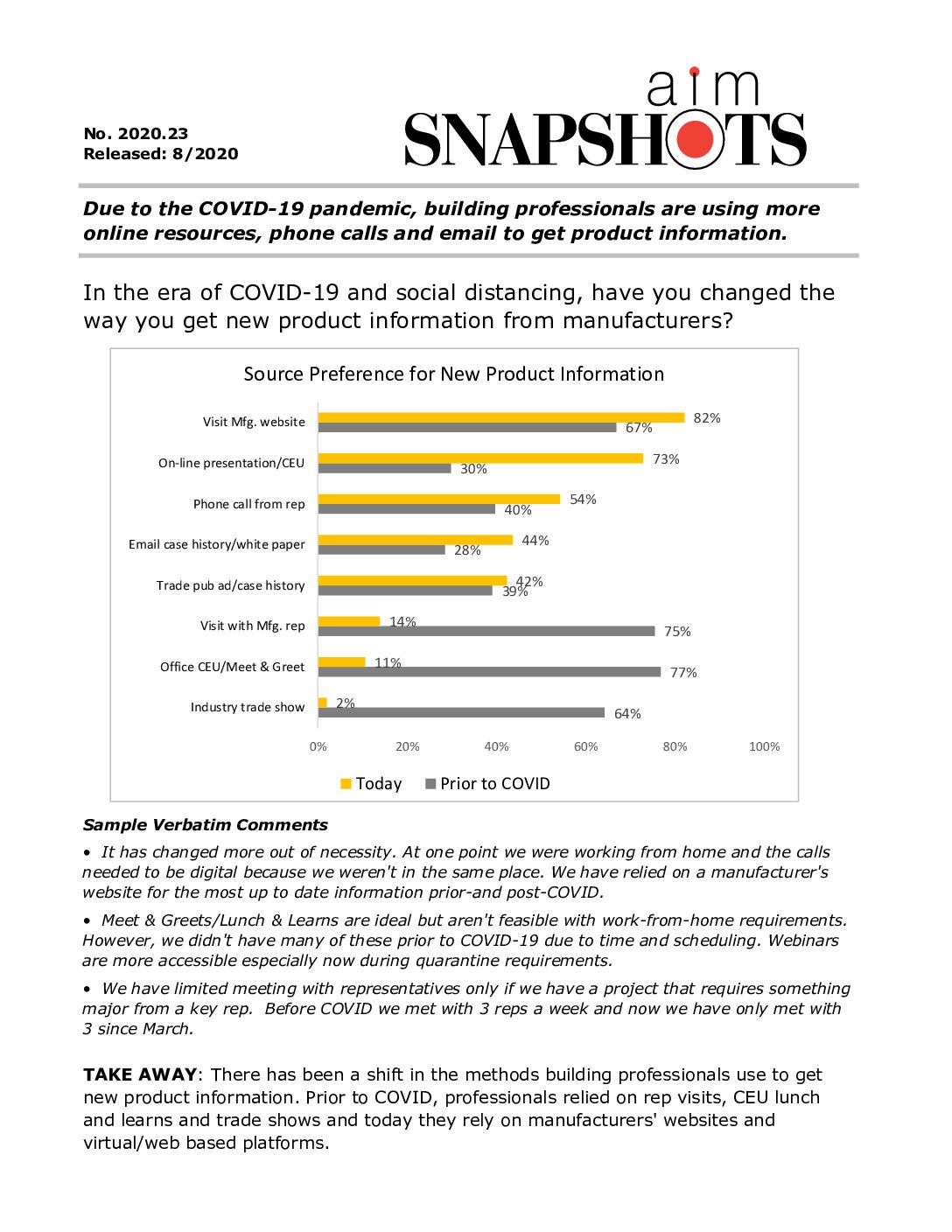
Due to the COVID-19 pandemic, building professionals are using more online resources, phone calls and email to get product information.
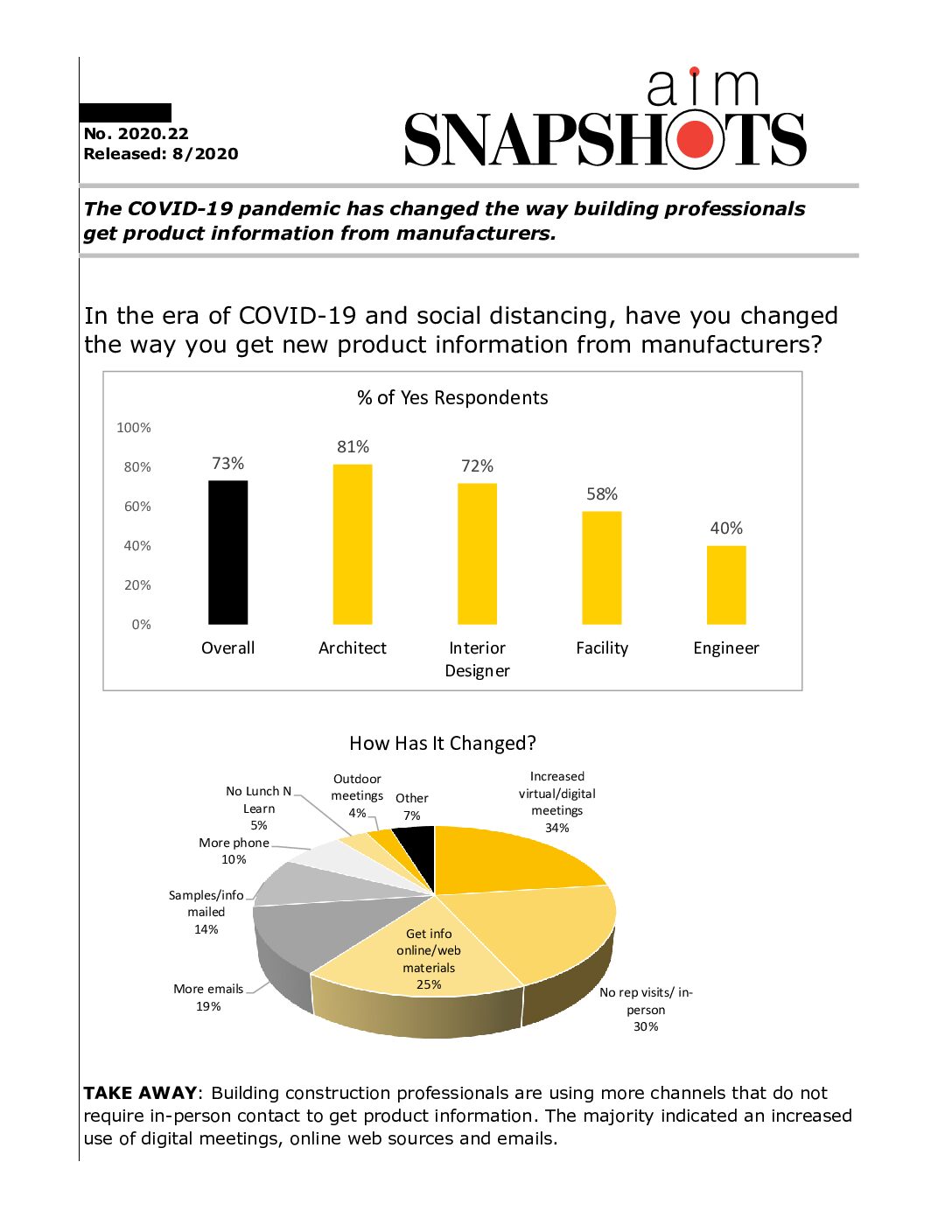
The COVID-19 pandemic has changed the way building professionals get product information from manufacturers.
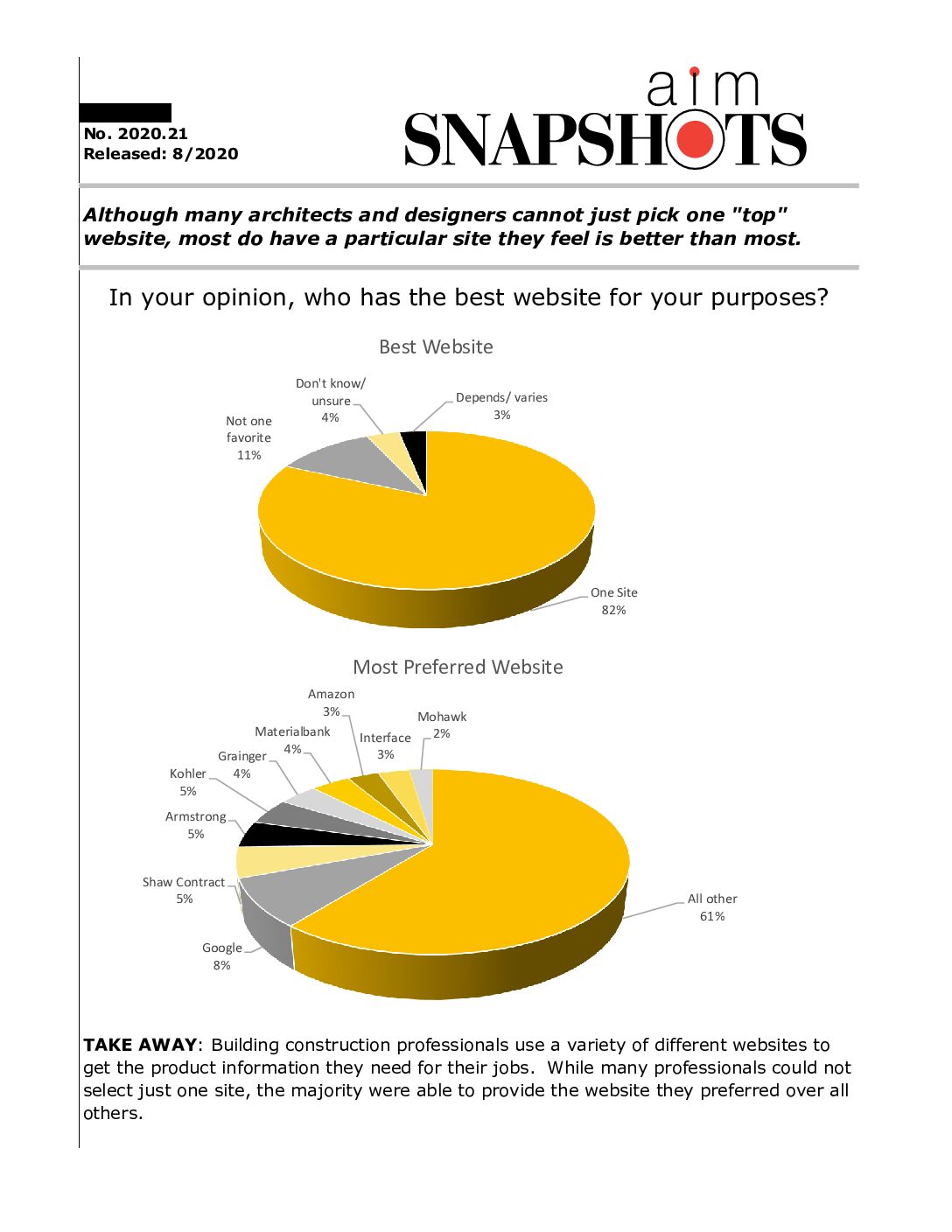
Although many architects and designers cannot just pick one “top” website, most do have a particular site they feel is better than most.
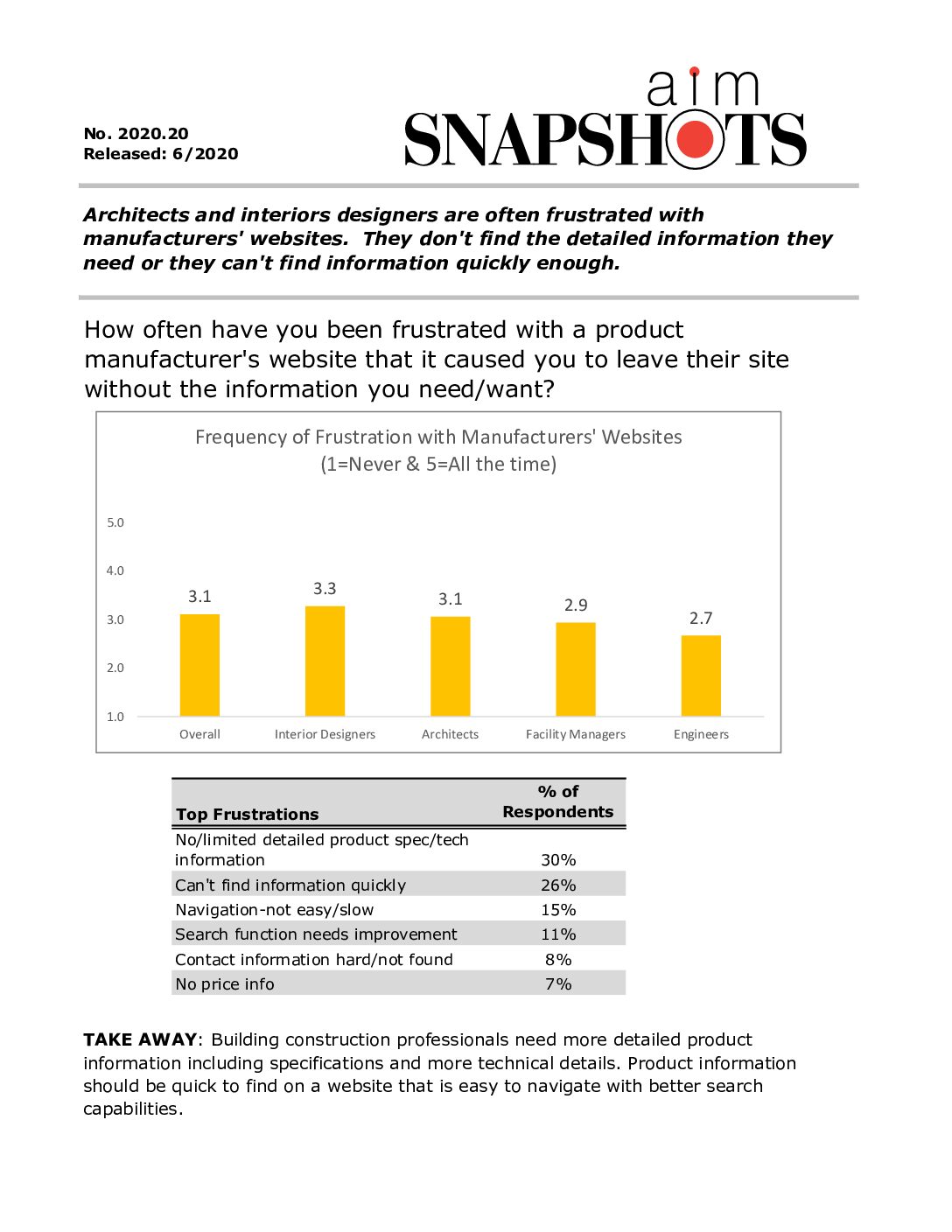
Architects and interiors designers are often frustrated with manufacturers’ websites. They don’t find the detailed information they need or they can’t find information quickly enough.

Building professionals have several suggestions for how manufacturers can improve their websites. Overall they want websites easier to navigate, search and get key information they need including product/tech documents, rep/contact and detailed product information.
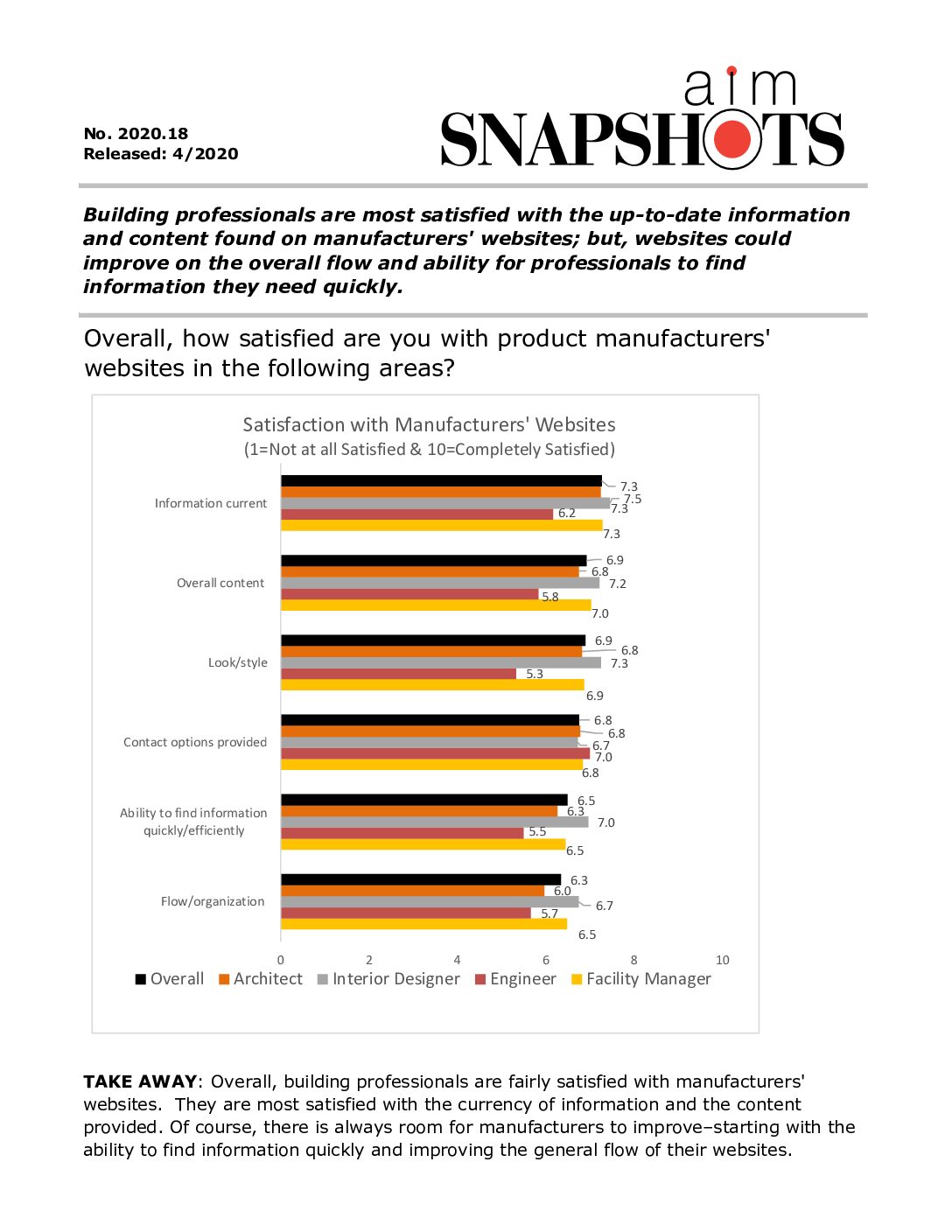
Building professionals are most satisfied with the up-to-date information and content found on manufacturers’ websites; but, websites could improve on the overall flow and ability for professionals to find information they need quickly.
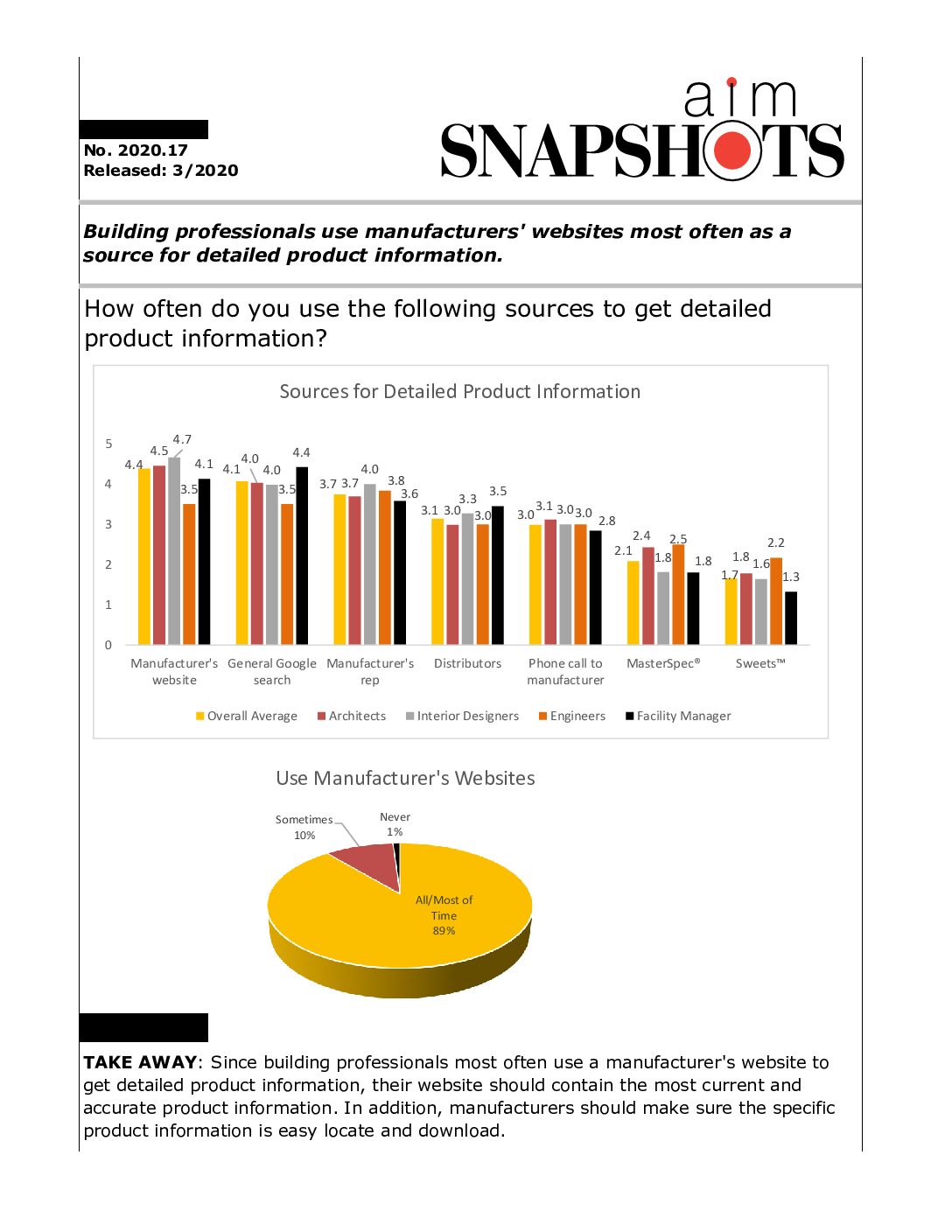
Building professionals use manufacturers’ websites most often as a source for detailed product information.

The majority of building professionals use the printed version of trade magazines and do not want publishers to eliminate print magazines.
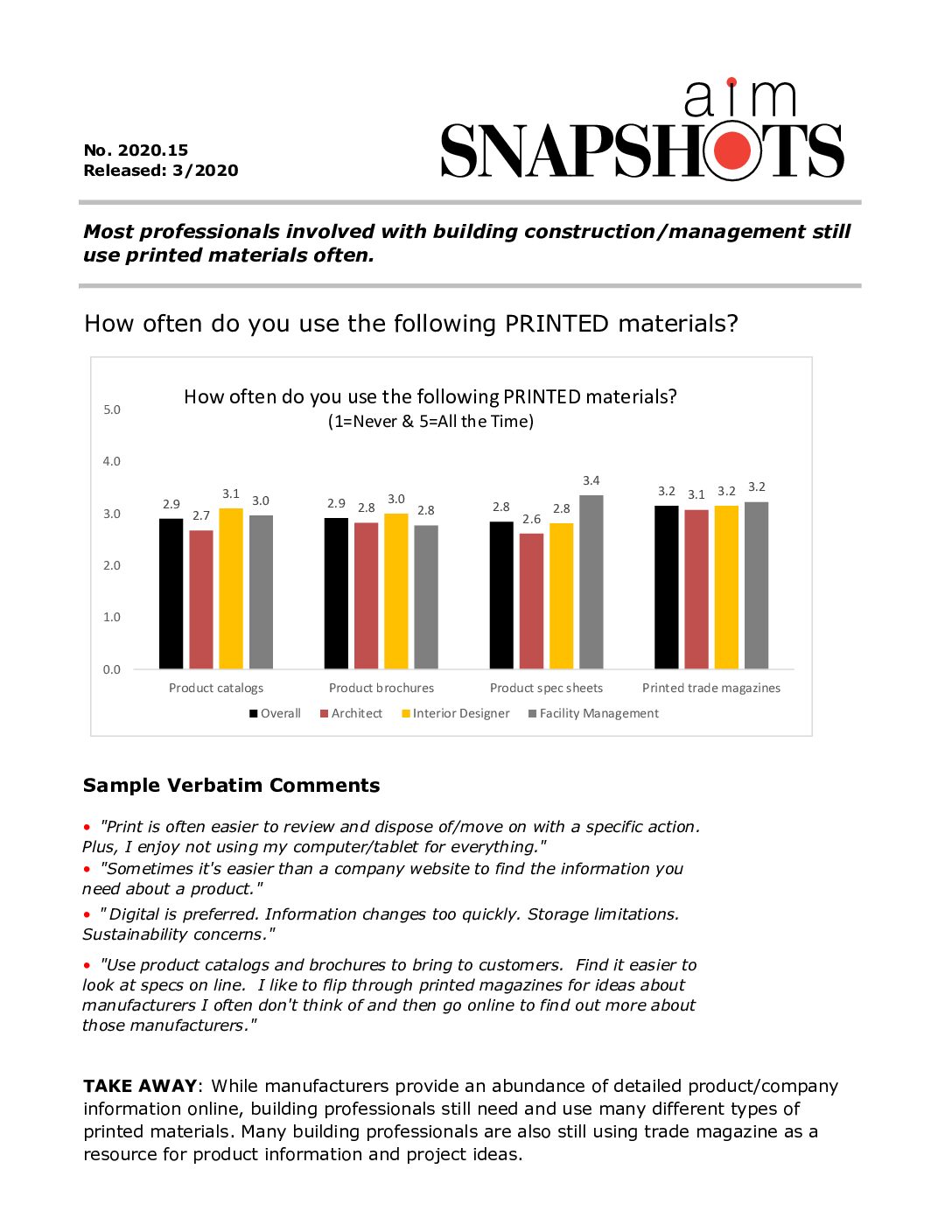
Most professionals involved with building construction/management still use printed materials often.
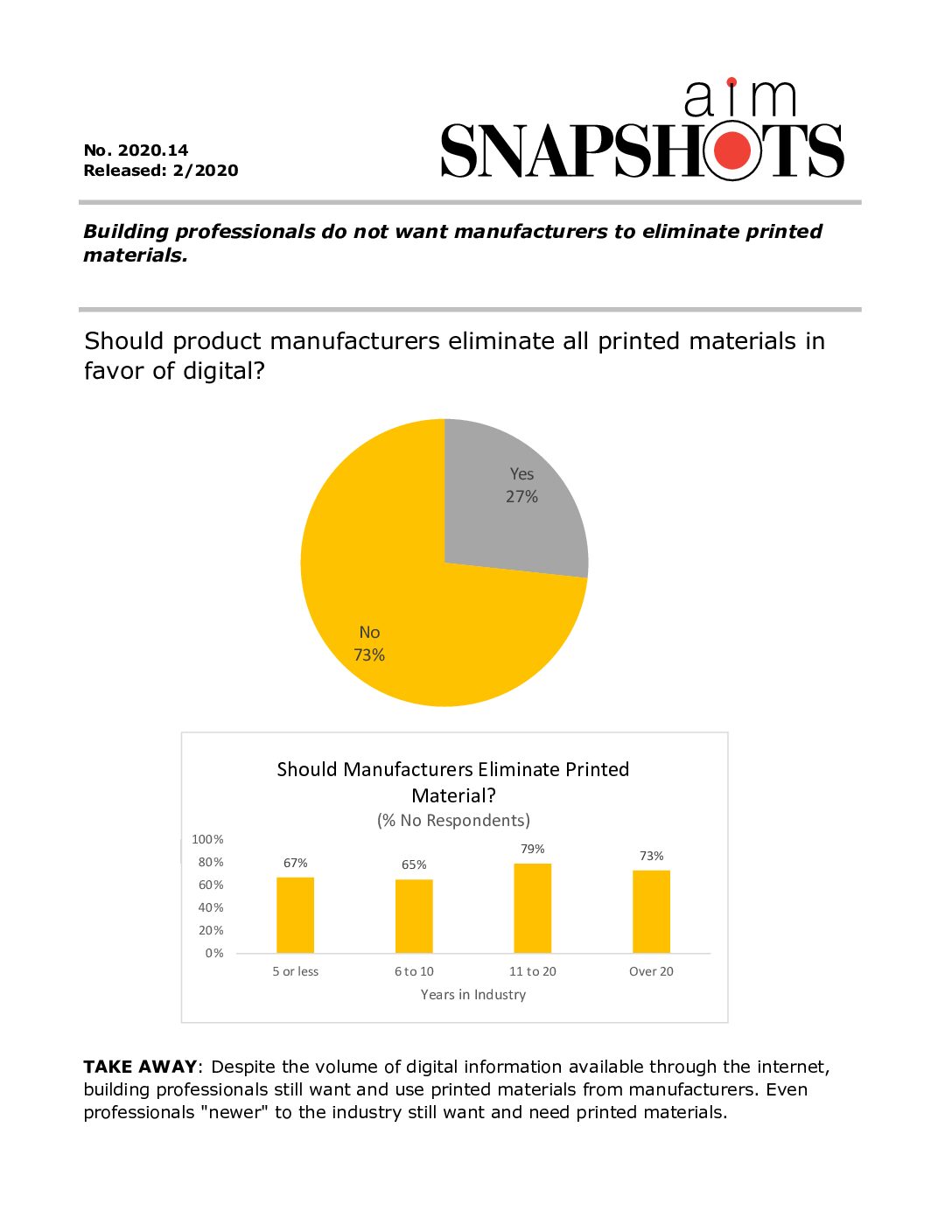
Building professionals do not want manufacturers to eliminate printed materials.
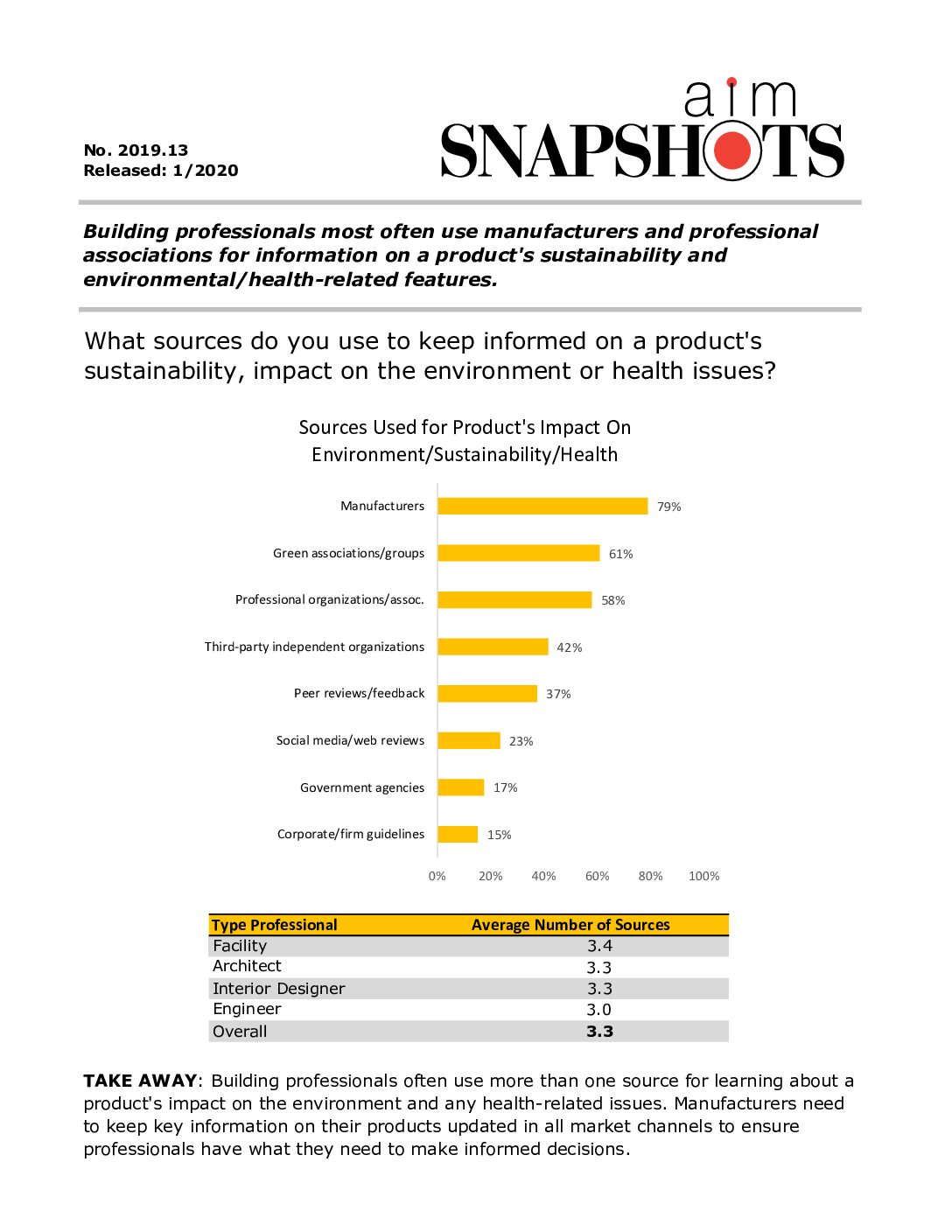
Building professionals most often use manufacturers and professional associations for information on a product’s sustainability and environmental/health-related features.
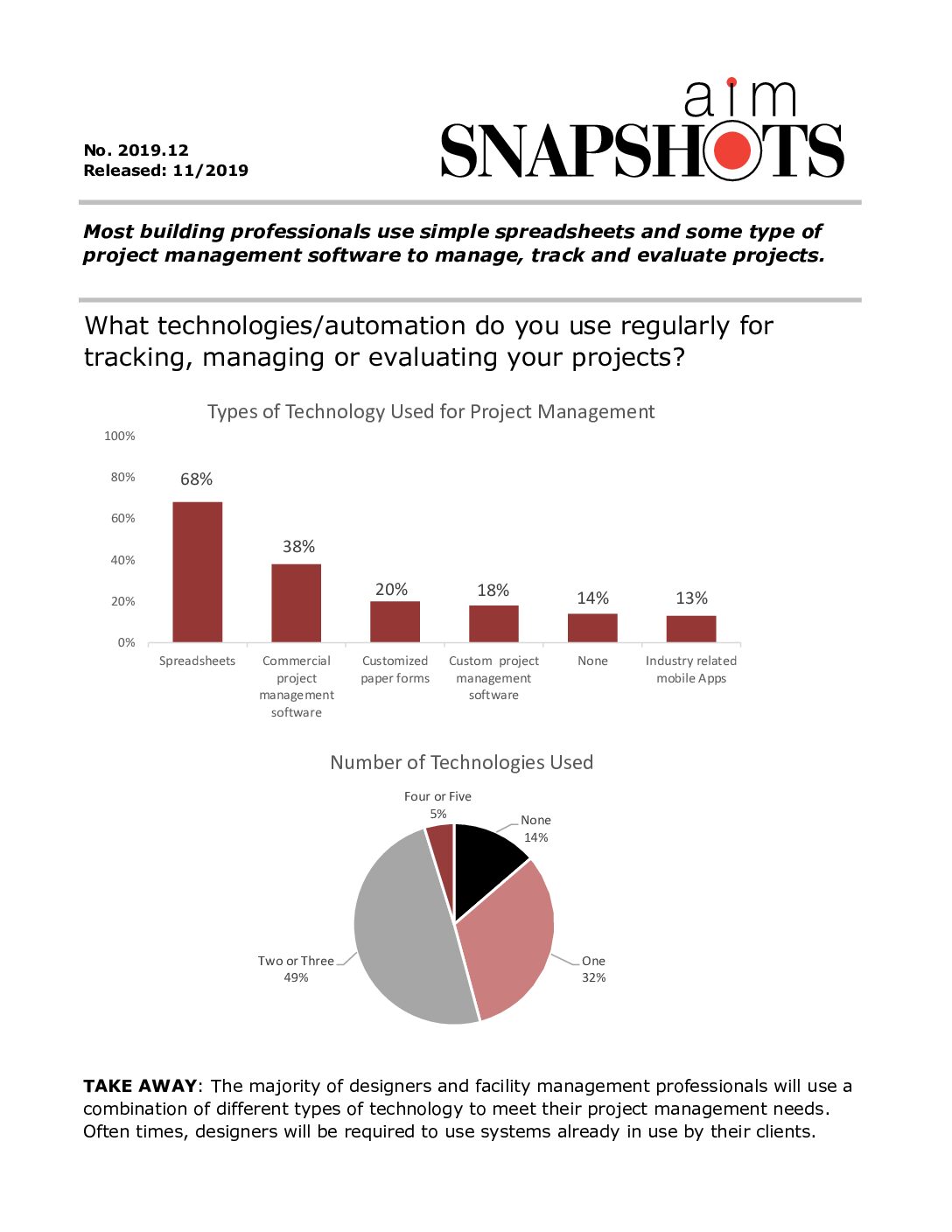
Most building professionals use simple spreadsheets and some type of project management software to manage, track and evaluate projects.
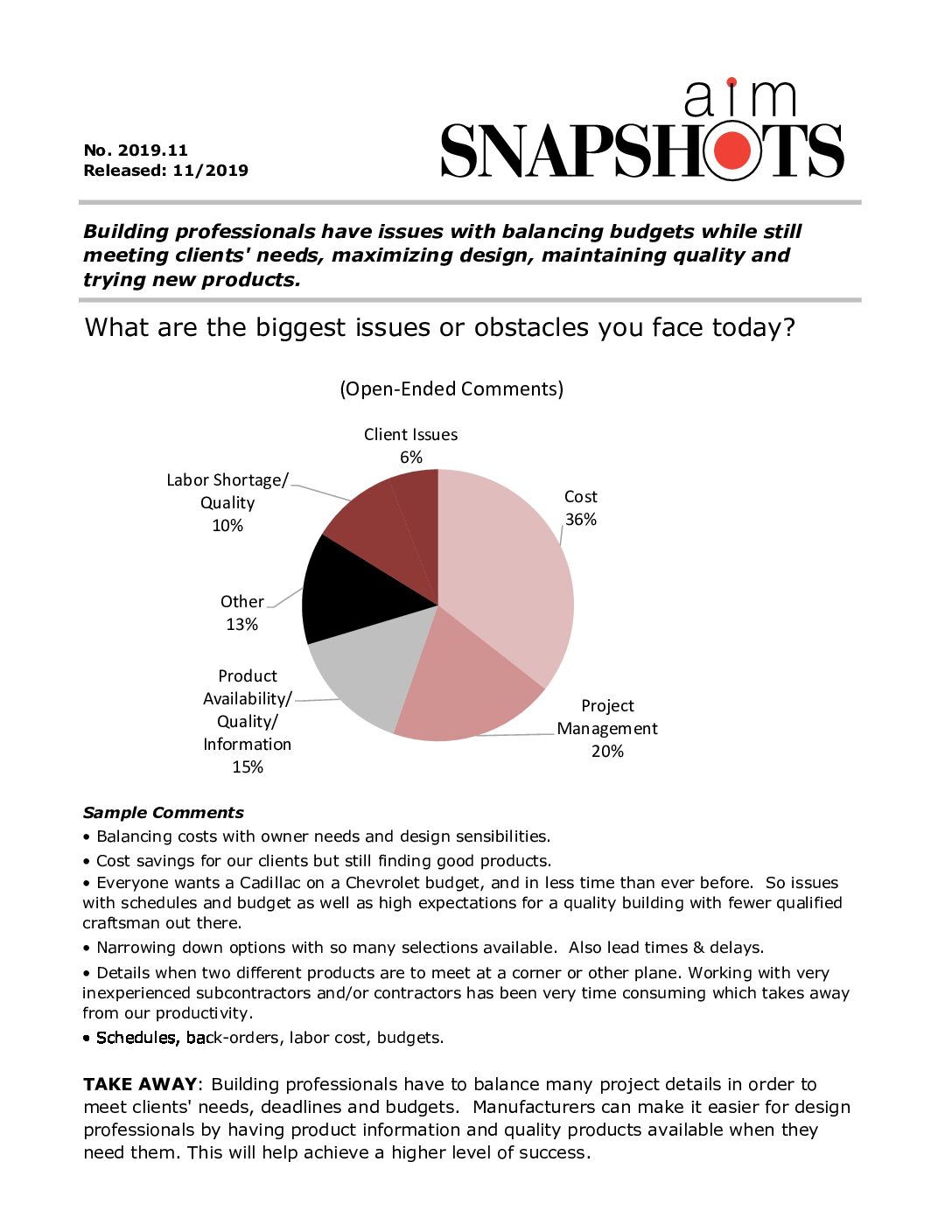
Building professionals have issues with balancing budgets while still meeting clients’ needs, maximizing design, maintaining quality and trying new products.

Most building professionals like to try new products, but are concerned about the durability, long-term track record and performance.
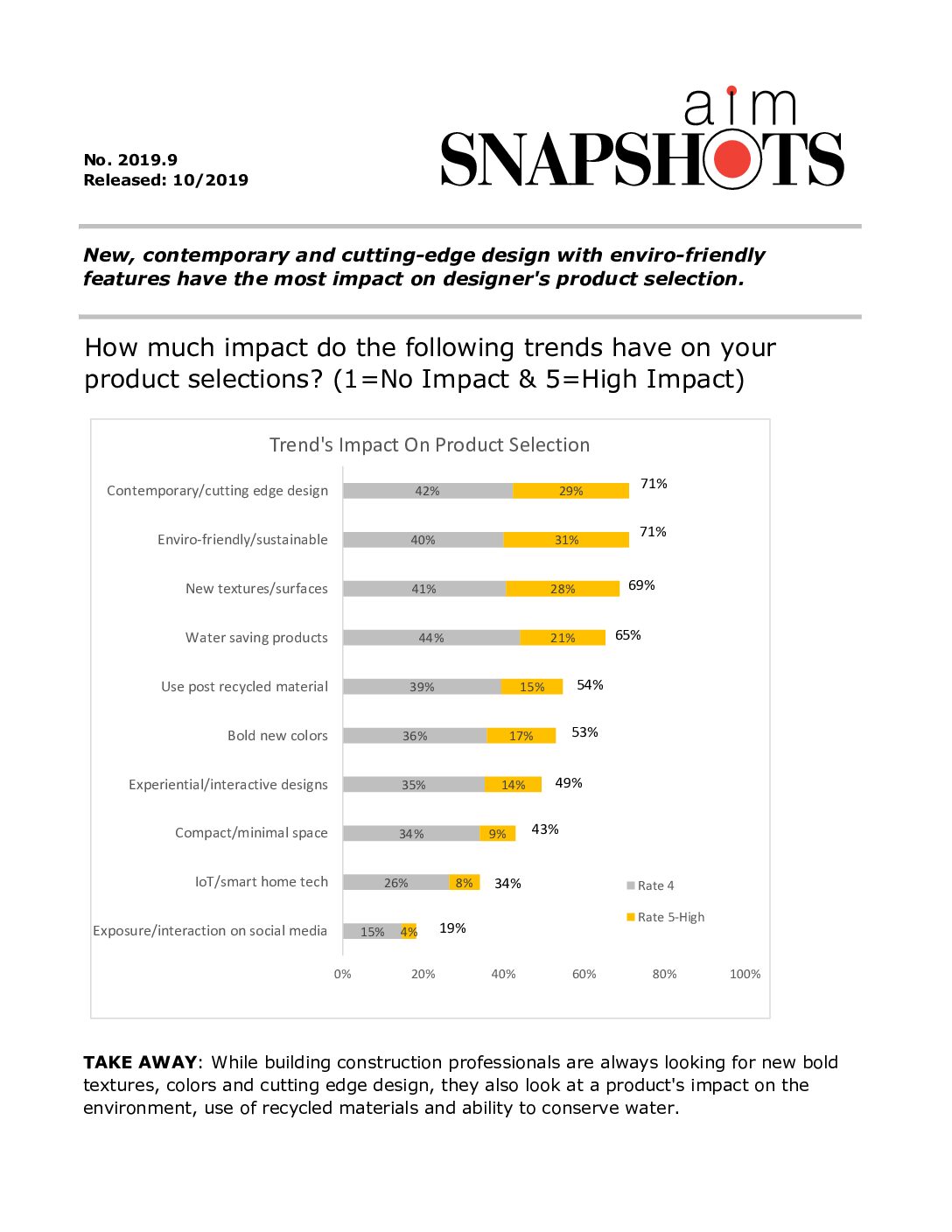
New, contemporary and cutting-edge design with enviro-friendly features have the most impact on designer’s product selection.
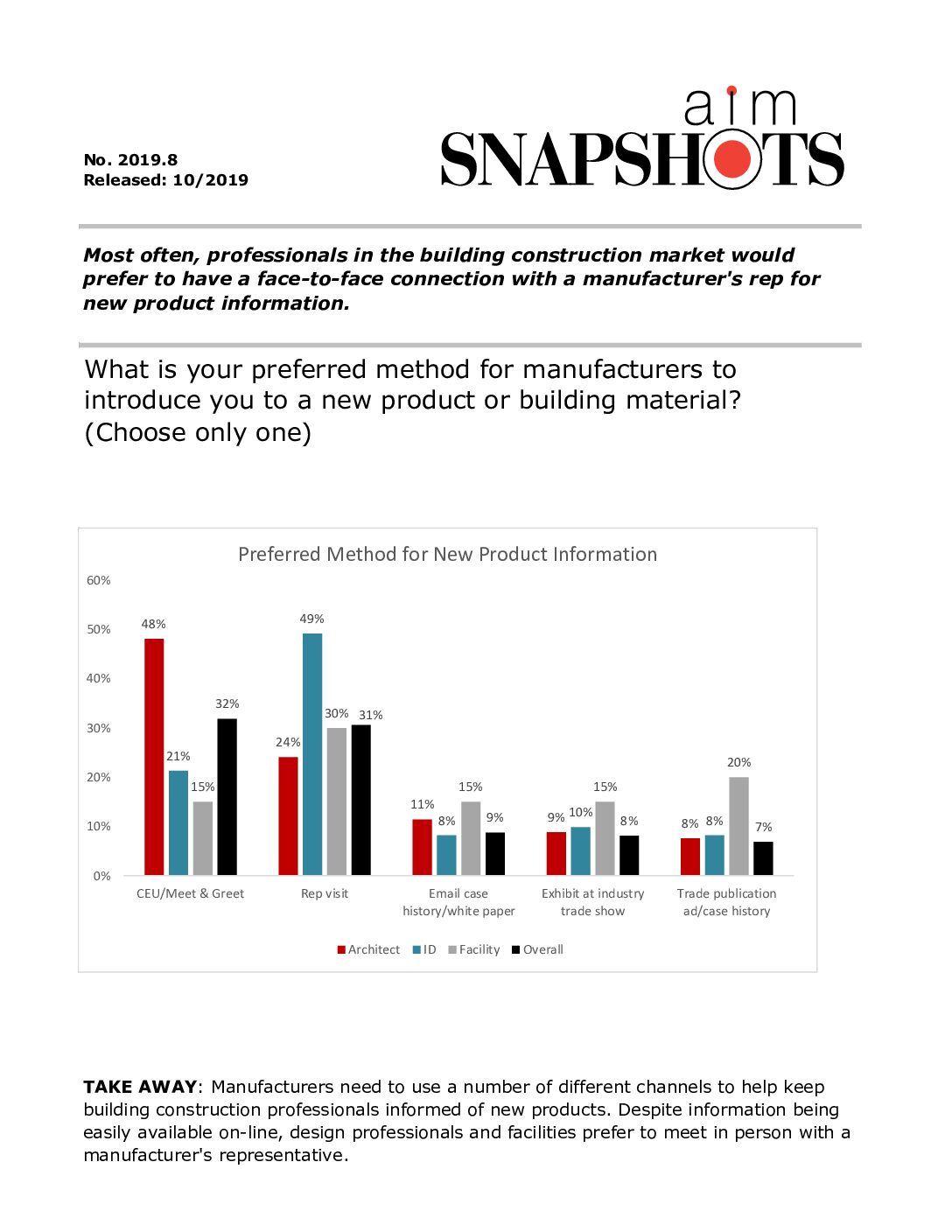
Most often, professionals in the building construction market would prefer to have a face-to-face connection with a manufacturer’s rep for new product information.

Often times, contractors will request the approval for a brand of product that is not in the specification.

Overall, the majority of architects and designers will try to customize their specs to meet project and client objectives.

Most designers do not list a specific brand with no substitution in their specifications. The majority use “no substitutions” on less than a quarter of their projects.

The majority of designers will use “brand or equal” in over 50% of their projects.

Approximately half of architects’/designers’ specifications include “basis of design” language when specifying commercial products.
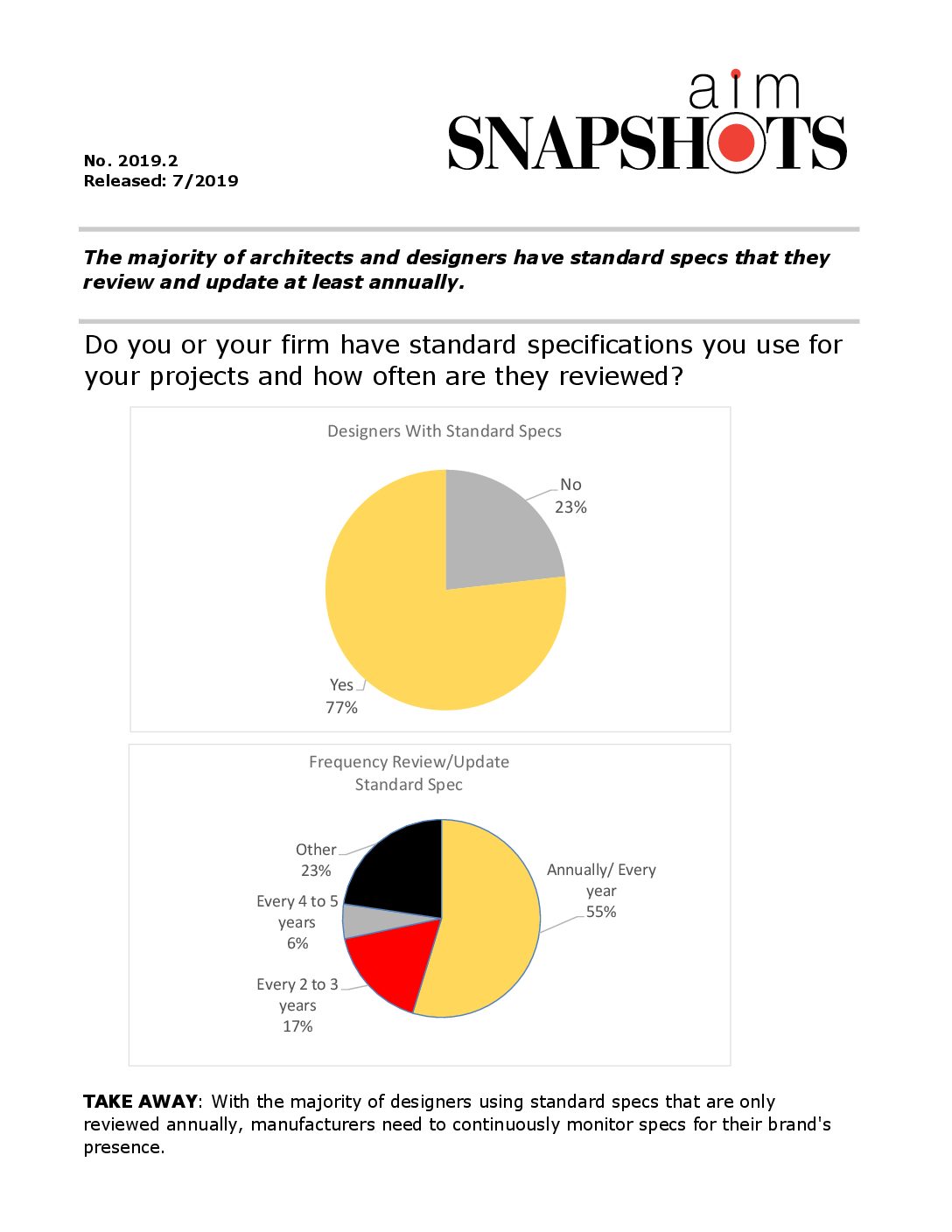
The majority of architects and designers have standard specs that they review and update at least annually.
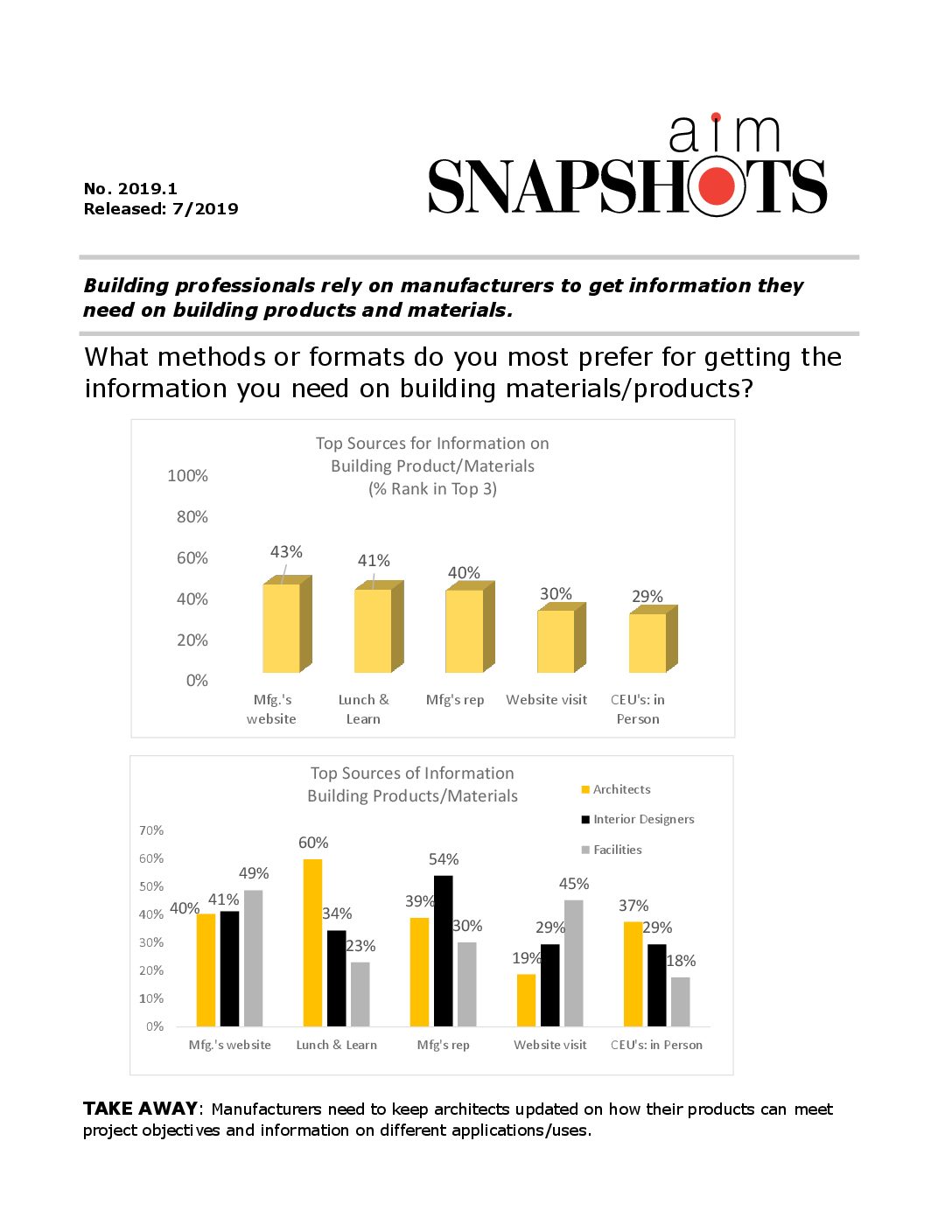
Building professionals rely on manufacturers to get information they need on building products and materials.